 Home
Home
8-Hour On Scene Incident Commander
Click to sign up forour E-Newsletter

Jump To Section
Regulation | Open Enrollment Seminars | Other Course Options | Individual Products
Open Enrollment Seminars
This class is not scheduled for any upcoming seminars. It is available for On-Site Training, Call or E-mail us to schedule a seminar.
Optionally, you can purchase the On-Site Training Seminar Kit below.
Course Regulation
29 CFR 1910.120:- (q)(6): Training. Training shall be based on the duties and function to be performed by each responder of an emergency response organization. The skill and knowledge levels required for all new responders, those hired after the effective date of this standard, shall be conveyed to them through training before they are permitted to take part in actual emergency operations on an incident. Employees who participate, or are expected to participate, in emergency response, shall be given training in accordance with the following paragraphs:
- (q)(6)(v): On Scene Incident Commander. Incident commanders, who will assume control of the incident scene beyond the first responder awareness level, shall receive at least 24 hours of training equal to the first responder operations level and in addition have competency in specific areas (q)(6)(v)(A) - (q)(6)(v)(F) and the employer shall so certify.
The Following Topics are Covered in this Course
- Regulations Overview
- Elements Of A Site Safety Plan
- Using Reference Materials
- Hazard Assessment
- OSHA Standard 1910.146
- Medical Monitoring
- Personal Protective Equipment
- Site Control Procedures
- Decontamination Techniques
- Company Specific Program Review
- Course Review And Final Test
Other Course Options
On-Site Training
New Environment, Inc. offers On-Site Training for this course, call or E-mail us to schedule this course.
Individual Products
Instructor Materials
$125.00 Add To Cart
The Following Topics are Covered in this Course
- Regulations Overview
- Elements Of A Site Safety Plan
- Using Reference Materials
- Hazard Assessment
- OSHA Standard 1910.146
- Medical Monitoring
- Personal Protective Equipment
- Site Control Procedures
- Decontamination Techniques
- Company Specific Program Review
- Course Review And Final Test
$125.00 Add To Cart
 Fully editable PowerPoint presentation for 8-Hour On Scene Incident Commander
Student Materials
$20.50 Add To Cart
Student Material Includes:
- Student Background Survey
- Student Classroom Workbook
- 20 Question Test
- Certificate Of Completion*
- Participant Evaluation Form
$6.00 Add To Cart
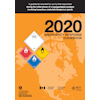
This Guidebook is primarily a guide to aid first responders in quickly identifying the specific or generic hazards of the material(s) involved in the incident, and protecting themselves and the general public during the initial response phase of the incident.
The Emergency Response Guidebook is updated every three to four years to accommodate new products and technology.
Use this DOT-issued guidebook to help you satisfy DOT's requirement that Hazmat shipments be accompanied by emergency response information (49 CFR Section 172.600).
View the 2024 Emergency Response Guidebook Summary of Changes from 2020.
Published by the U.S. Department of Transportation. 4"x5.25" Pocket Version
$22.50 Add To Cart
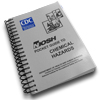
The NIOSH Pocket Guide to Chemical Hazards presents key information and data in abbreviated or tabular form for chemicals or substance groupings (e.g. cyanides, fluorides, manganese compounds) commonly found in the work environment. With this handy book you'll find information on recommended exposure limits, permissible exposure limits, chemical and physical properties, health hazards and personal protection for 677 chemicals regulated at the federal level.
- Most Current Printing/Revision Date.
- New layout for the Chemical Listing section, each chemical arranged in its own table.
- Expanded Chemical, Synonym and Trade Name Index.
- Conversion factors, Chemical Abstracts Service Registry Number and The Registry of Toxic Effects of Chemical Substances.
- Updated DOT ID and Guide Numbers to reflect changes made by DOT in the 2016 Emergency Response Guidebook.
- NIOSH Recommended Exposure Limits (NIOSH RELs).
- Occupational Safety and Health Administration Permissible Exposure Limits (OSHA PELs).
- NIOSH Immediate Dangerous to Life and Health values (NIOSH IDLHs).
- A physical description of the agent with chemical and physical properties.
- Measurement methods.
- Personal Protection and Sanitation Recommendations.
- Particulate respirator recommendations revised to include Part 84.
- Information on Health Hazards including: Route, Symptoms, First Aid and Target Organ information.
- Revised Appendix E to include OSHA respirator requirements for hazardous substances identified in the preamble to the OSHA Respiratory Protection Standard (29 CFR 1910.134).