There is not a more cost effective way to train a large number of employees than our Train The Trainer program. As you know, it takes a lot of time and money to initially develop a training program, procure supplemental videos, and produce student handouts; not to mention the time it takes to keep abreast of ever changing regulations. These expenses can be greatly reduced through the use of our programs.
Jump To Section
Open Enrollment Seminars |
Other Course Options |
Regulation |
Individual Products


This self-study program is intended for the exclusive use of "Qualified" individuals who can show by documentation or certification that their work experience and/or training has resulted in "at least 24 hours" of training equivalent to that training required in paragraphs (e)(1) through (e)(4) of 29 CFR 1910.120.
Examples of "Qualified" individuals include: Prior experience in Occupational Safety and Health or hazardous waste operations or emergency response, or an Associate's or Bachelor's Degree in a physical or natural science or engineering, with course work in chemistry.
Individuals wishing to utilize this self study option must also be able to demonstrate (by means of professional resume or letter from employer) experience as an instructor/trainer in a professional capacity.
If you have more than one person that needs to have the Train The Trainer Self-Study, then take advantage of even more savings. This second set of instructor material is compatible with the course disk purchased in the full package.
New Environment, Inc. offers On-Site Training for this course, call or E-mail us to schedule this course.

Using our Train The Trainer program, you will be able to teach any of our HAZWOPER/HAZMAT programs including:
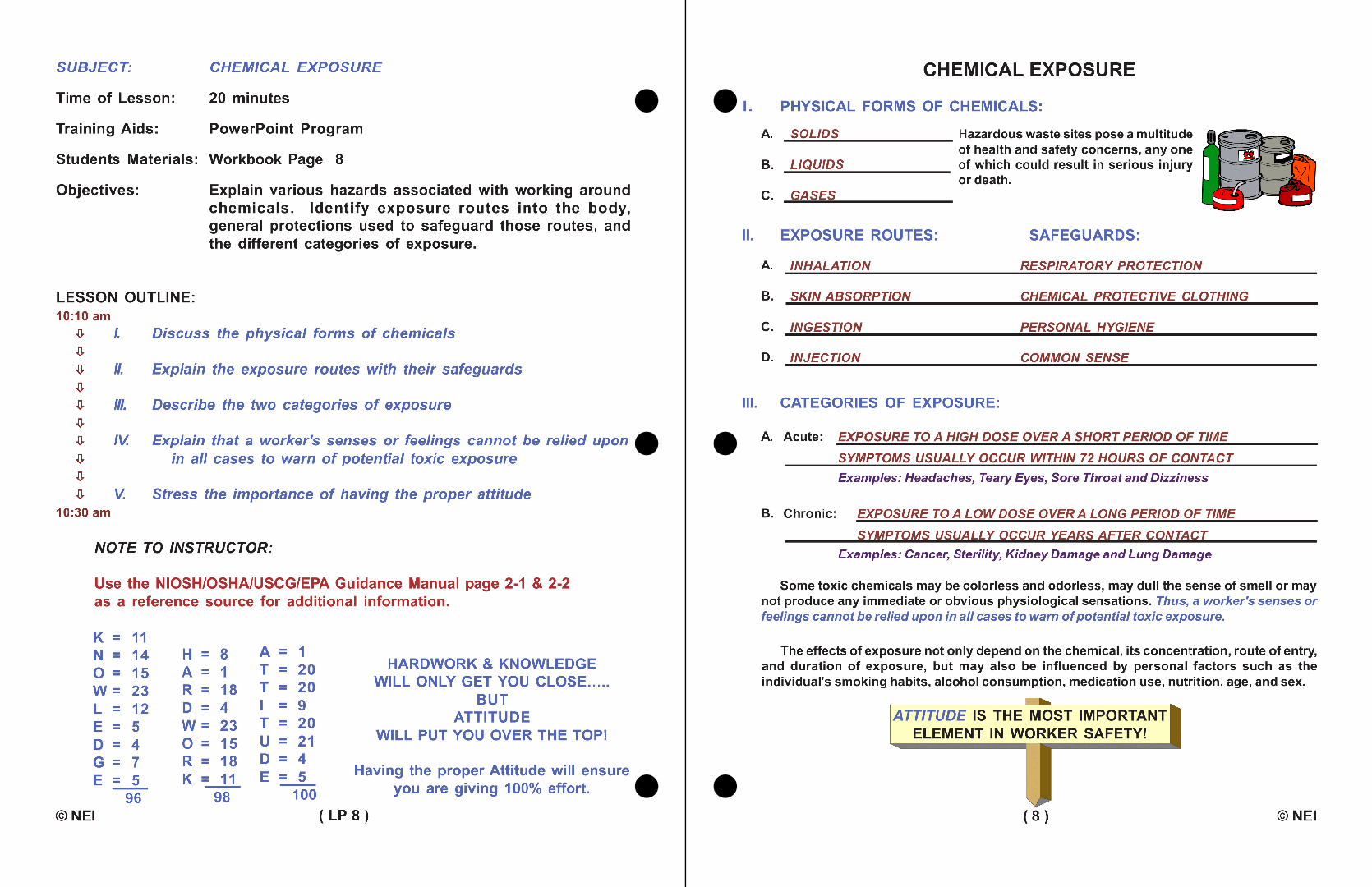
New Environment, Inc.'s comprehensive HAZWOPER/HAZMAT Train The Trainer program helps enable staff trainers to conduct OSHA/DOT/EPA required training in-house. In addition to the typical Instructional Skills training provided by most Train The Trainer type programs, participants also receive detailed instruction on the subject matter and a complete set of course Lesson Plans. A complimentary "Basic Video Package" is also included.
Hundreds of Companies, Universities, and Government Agencies are using the New Environment, Inc. curriculum. (View our References)
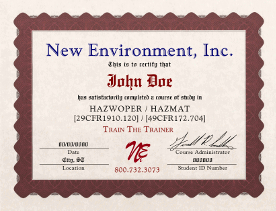
Upon successful completion of the course each Trainer receives the following New Environment, Inc. Certifications:
This course is intended to improve the instructional skills, abilities, and knowledge of HAZWOPER/HAZMAT trainers. Participants will be required to present at least one 30-minute training segment on a health or safety topic chosen during the course. Approval as a Trainer is required through 29 CFR 1910.120 (e)(5) & (q)(7).
Get all of out HAZWOPER/HAZMAT lesson plans in one binder that includes the following:
Get all of out HAZWOPER/HAZMAT PowerPoint® programs on one CD that includes the following:
These are professionally produced video programs. The average run time is 12.5 minutes per topic, about 5 hours of material. The full retail price for the individual programs would normally be well over $2100.00. These videos are designed to be used with our "HAZWOPER Lesson Plans".
Click on the each dvd for a description of the titles.
This Package consists of 23 video titles on 6 DVD's.
| Video 1: |
DOT Shipping of Hazardous Materials (14 min.) This video is designed to meet the training requirements of anyone involved in the shipment of hazardous materials, which includes shipping/receiving personnel. Explains CFR 49, Parts 100-185. Discusses the Emergency Response Guidebook, HAZMAT training requirements for shippers, and teaches students how to use 49 CFR HAZMAT tables and special provisions. Excellent basic course for shipper of hazardous materials. How do you ship hazardous materials? U.S. Postal Service? U.P.S.? FEDEX? This training program explains the proper method. |
|
|
|
| Video 2: |
Hazard Communications (18 min.) Meets OSHA requirements for training employees who use chemicals/hazardous materials in the workplace. Describes material safety data sheets (MSDS), labeling, and basic safety when using these materials. |
| Video 1: |
Personal Protective Equipment (10 min.) Emphasizes the importance of using personal protection when required. Addresses hard hats, gloves, eye protection, hearing protection, and other aspects of protective equipment. |
|
|
|
| Video 2: |
On-Site Safety Considerations (12 min.) Program explains various types of hazards that can be encountered in HAZWOPER operations. Meets basic requirements of annual refresher training and basic safety training of lockout/tagout, confined space entry, unsafe conditions, unsafe acts, and most common physical hazards prevalent in HAZWOPER operations. Reinforces the HAZWOPER plan requirements, and more. |
| Video 1: |
Introduction to Industrial Toxicology (15 min.) What is toxicology? Terms, definitions, and entranceways of toxins into the body are covered in this extensive video. The different types of hazards, hazard identification, and exposure limits are explored, including the different types of TLV. Basic emergency response procedures are outlined as well as how to use Emergency Response Guidebooks to identify and properly respond to chemical hazards. |
|
|
|
| Video 2: |
NFPA Hazardous Materials Labeling/I.D. (7 min.) NFPA labeling and ID program defined and stresses the importance of understanding these signs and placards. Firefighters have used this program for their training. |
|
|
|
| Video 3: |
Carbon Monoxide Poisioning (13 min.) Defines carbon monoxide poisoning and how to reduce the effects of this health hazard. Almost every industry is exposed, but very little attention is given to its effects. Excellent awareness program. |
|
|
|
| Video 4: |
Hazardous Energy Source-Lockout/Tagout (10 min.) Mandatory training for both "affected" and "authorized" personnel. Explains what lockout-tagout is and how to control potential accidents from machines and equipment that may be started accidentally through a variety of energy sources. |
|
|
|
| Video 5: |
Trenching and Shoring Operations (12 min.) Meets training requirements for those persons assigned the job of trenching and shoring. Explains the safety rules, requirements, procedures and emergency procedures. |
| Video 1: |
Heat Stress (9 min.) Program explains how to protect your body in high temperature/high humidity environments. Explains precautions to avoid heat stroke, heat exhaustion, and basic first aid procedures. |
|
|
|
| Video 2: |
Confined Space Entry (11 min.) Meets training requirements for anyone working or entering a confined space. Explains the rules, procedures, emergency procedures and more. |
|
|
|
| Video 3: |
Confined Space Entry: The Silent Killers (18 min.) This training program provides an overview of the general types of hazards associated with confined spaces, basic atmospheric testing requirements and information relating to confined spaces. The major emphasis for this program is the ATTENDANT. Generally, this person is the least trained, yet has the life and death responsibility for those entering the confined space. This program helps the attendant understand his/her responsibilities. Attendant training is one of the most important "confined space" training programs you can use. |
|
|
|
| Video 4: |
Job Safety Analysis (11 min.) Program explains what job safety analysis is all about and how to conduct a job safety analysis. |
|
|
|
| Video 5: |
Testing & Monitoring for Hazardous Gases (12 min.) General awareness and basic safety for persons who must test and monitor for hazardous gases in such areas as trenching operations, confined space entry, and others. |
|
|
|
| Video 6: |
Life Saving Through Air Monitoring (13 min.) A survey of common toxic atmosphere hazards including oxygen deficiency, hydrogen sulfide, carbon monoxide/dioxide. Also covered are general examples of air monitoring techniques, sampling, calibration, and how to deal with combustible/toxic gases. |
| Video 1: |
Respirators & How to Use Them (10 min.) Program explains the different types of respirators, how they are used, some of their capabilities and limitations. An excellent training rogram in the use of respiratory protection equipment for employees. |
|
|
|
| Video 2: |
How to Fit Test Respirators (10 min.) This training video explains why fit testing is necessary, how to properly fit test respiratory equipment, and general information on caring and using equipment. |
|
|
|
| Video 3: |
Chemical Protective Clothing (10 min.) Designed to explain various types of chemical protective clothing requirements, various limitations of protective clothing and information ating to one of the most important aspects of HAZWOPER training. Reviews potential heat stress related to wearing chemical protective clothing. |
|
|
|
| Video 4: |
Obtaining Information in an Emergency (17 min.) If you are the first responder in a hazardous materials emergency, then you need to know where to get HAZWOPER information. This video covers HAZWOPER issues, including: emergency response plans, hazardous materials clean up operations, and emergency procedures. But there is more. Where would you find the information on Facility Emergency Response Plans, SPCC, NFPA 704 System, Emergency Response Guidebook, MSDSs, and Shipping documents? After training with this video, everyone will know. |
|
|
|
| Video 5: |
Donning/Doffing/Decontamination (17 min.) Designed to meet training requirements of subject title. Describes how to don chemical protective clothing, how to properly remove it, and decontamination procedures. Includes actual HAZWOPER footage of proper decontamination from real life situations. |
|
|
|
| Video 6: |
Chemical Spills, Leaks & Clean Up Operations (15 min.) Meets training requirements for basic spills and clean up procedures. Emphasizes individual safety, proper equipment, and general safety rules relating to spill clean up. |
| Video 1: |
Site Safety & Health Plan (14 min.) Overview of general safety and health plan requirements, emergencies incident characterization, remedial actions, and site safety plan creation. Explains site control issues, routine operations, on-site emergencies, medical care, evacuation procedures, and more. Emphasizes employer responsibilities and the importance of testing the plan. |
|
|
|
| Video 2: |
Superintendent/Supervisor Safety Responsibilities (12 min.) Training supervisors is of critical importance and does help reduce injury rates and costs. Understanding their responsibility, legal liabilities and potential exposures improves supervisors' safety performance on the job. |
Click on the DVD for a description of the titles.
| Video 1: |
Poisons Identification, Toxicity and Safe Handling (60 min.) This program defines poisons and includes information on toxicological terms and how they relate to the emergency scene, physical form and characteristics of different poisons, containers in which these materials are shipped or stored, placarding and labeling requirements, and handling instructions in case of a release of fire. |
| Video 1: |
Oxidizer Hazards & Fire Suppression (55 min.) The program defines oxidizers and includes information on physical form and characteristics, containers in which these materials can be shipped or stored, hazards of the materials and problems if they become contaminated handling instructions in case of a release or fire, hazards of handling guidelines for organic peroxides, laboratory demonstrations and actual incidents are used to illustrate these points. |
| Video 1: |
Carbon Monoxide Safety (23 min.) Presents infomation on the hazards of Carbon Monoxide in the work place, air monitoring techniques, safe work practices, signs and symptoms, and more. |
|
|
|
| Video 2: |
Trenching & Excavating Safety (30 min.) Presentation on proper trenching and excavation procedures. |
| Video 1: |
Situation Critical- USS Forrestal (24 min.) This is the Discovery Channel special that was first aired August 3, 1997 and is re-aired periodically; it documents the tragic fire and explosions that almost destroyed the world's first super carrier on July 29, 1967. It is "A gripping documentary" according to Ken Ringle of the Washington Post and is dedicated to those who lost their lives that horrible day. The tragic blaze aboard the U.S.S. Forrestal was the most devastating single naval casualty event of the Vietnam War, and possibly the worst onboard accident in American Naval history. Situation Critical -- U.S.S. Forrestal relives the catastrophe and salutes the heroism of its crew. Footage from cameras onboard the aircraft carrier and eyewitness interviews recount the event, which took 134 lives and injured 34. On July 29, 1967, the carrier was operating on Yankee Station off the coast of North Vietnam. A mid-morning rocket launch went awry and hit an armed A-4 Skyhawk setting off a chain of explosions. Before it was over, the ship had experienced the impact of more than a dozen major detonations from 1,000 and 500-pound bombs, as well as many missile, fuel tank, and aircraft explosions. |
| Video 1: |
First on the Scene, E.R. Procedures (32 min.) Outlines proper emergency response procedures for chemical incidents. |
|
|
|
| Video 2: |
Teamwork, E.R Protocol (37 min.) Overview of an emergency response incident, implementation of the Incident Command System, and other pratical chemical safety procedures. |
| Video 1: |
Atmosphere Supplying Respirators (25 min.) Training program covering the basic components of the Pressure Demand AirMask, how to properly don the apparatus, and how to assure proper fit. |
|
|
|
| Video 2: |
Air Purifying Respirators (25 min.) Covers the use, care, and maintenance of Air Purifying Respirators |
| Video 1: |
Assorted Chemical Safety Board Videos Titles covering various incident reviews and safety topics over a dozen titles. |