Click to sign up for
our E-Newsletter

Class Hours:
8
Course Code:
HWR
Jump To Section
Regulation |
Open Enrollment Seminars |
Other Course Options |
Individual Products
Open Enrollment Seminars
This class is not scheduled for any upcoming seminars. It is available for On-Site Training, Call or E-mail us to schedule a seminar.
Optionally, you can purchase the On-Site Training Seminar Kit below.
Course Regulation
29 CFR 1910.120:
-
(e)(1)(i):
All employees working on site (such as but not limited to equipment operators,
general laborers and others) exposed to hazardous substances, health hazards,
or safety hazards and their supervisors and management responsible for the site
shall receive training meeting the requirements of
this paragraph before they are permitted to engage in hazardous waste operations
that could expose them to hazardous substances, safety, or health hazards,
and they shall receive review training as specified in this paragraph.
-
(e)(8):
Refresher training. Employees specified in paragraph (e)(1) of this section,
and managers and supervisors specified in paragraph (e)(4) of this section,
shall receive eight hours of refresher training
annually on the items specified in paragraph (e)(2) and/or (e)(4) of this
section, any critique of incidents that have occurred in the past year that
can serve as training examples of related work, and other relevant
topics.
The Following Topics are Covered in this Course
- Regulations Overview
- Hazard Assessment
- Fire And Explosion
- Oxygen Deficiency
- Potential Site Hazards
- Reference Material Exercise
- OSHA Standard 1910.146
- Medical Monitoring
- Air Monitoring
- Respiratory Protection
- Chemical Protective Clothing
- Site Control
- Decontamination
- Site Emergencies
- Course Review And Final Test
Other Course Options
Seminar Kits for Instructors
$495.00
Add to Cart
8-hour HAZWOPER Refresher - A Kit
 Class Hours: 8
Regulation: 29CFR 1910.120 (e)(8) & (q)(8)
Class Hours: 8
Regulation: 29CFR 1910.120 (e)(8) & (q)(8)
- 1 - Easy to Use Color Instructor Lesson Plan
- 10 - Student Workbooks
- 10 - Student Course Tests
- 10 - Student Certificates
- 10 - DOT Emergency Response Guidebooks
- 1 - Course PowerPoint® with Regulations
- 1 - Course Videos - Over Two Dozen Safety Titles to Supplement Your Training
$26.50
Add to Cart
8-hour HAZWOPER Refresher - A Kit Refill

Additional student packs can be purchased to include:
- 1 - Student Workbook
- 1 - Student Test
- 1 - DOT Emergency Response Guidebook
- 1 - Course Certificate
$495.00
Add to Cart
8-hour HAZWOPER Refresher - B Kit
 Class Hours: 8
Regulation: 29CFR 1910.120 (e)(8) & (q)(8)
Class Hours: 8
Regulation: 29CFR 1910.120 (e)(8) & (q)(8)
- 1 - Easy to Use Color Instructor Lesson Plan
- 10 - Student Workbooks
- 10 - Student Tests
- 10 - Student Certificates
- 10 - DOT Emergency Response Guidebooks
- 1 - Course PowerPoint® with Regulations
- Course Videos - Over Two Dozen Safety Titles to Supplement Your Training
$26.50
Add to Cart
8-hour HAZWOPER Refresher - B Kit Refill

Additional student packs can be purchased to include:
- 1 - Student Workbook
- 1 - Student Test
- 1 - DOT Emergency Response Guidebook
- 1 - Course Certificate
Online Couse Options
View the online course requirements on our Online Courses Page.
$75.00
Add to Cart
Online 8-hour HAZWOPER Refresher
 Prerequisite:
40-Hour Hazardous Waste Worker
Class Hours:
8
Regulation(s):
29CFR 1910.120 (e)(8)
Course Code:
HWR-OL
Prerequisite:
40-Hour Hazardous Waste Worker
Class Hours:
8
Regulation(s):
29CFR 1910.120 (e)(8)
Course Code:
HWR-OL
Course Description
This On-line training program is intended for the exclusive use of "Qualified" individuals
who can show by documentation or certification that their work experience and/or training
has resulted in "at least 40 hours" of training equivalent to that training required in
paragraphs (e)(3)(i) of 29 CFR 1910.120.
Examples of "Qualified" individuals include: Prior experience in Occupational Safety
and Health or hazardous waste operations or emergency response (40-Hr HAZWOPER
Worker or 24-Hr ER Technician).
Our program is intuitive and easy to use for yourself and your employees. Order for
your entire department and use our automated invitation program to send registration
codes to each individual in your department.
As always you will receive the same product and content support as you have come
to expect from New Environment, Inc. Professional HAZWOPER instructors are standing
by to answer your questions and concerns before, during and after the completion of
your training.
Course Regulation
29 CFR 1910.120:
-
(e)(1)(i):
All employees working on site (such as but not limited to equipment operators,
general laborers and others) exposed to hazardous substances, health hazards,
or safety hazards and their supervisors and management responsible for the site
shall receive training meeting the requirements of
this paragraph before they are permitted to engage in hazardous waste operations
that could expose them to hazardous substances, safety, or health hazards,
and they shall receive review training as specified in this paragraph.
-
(e)(8):
Refresher training. Employees specified in paragraph (e)(1) of this section,
and managers and supervisors specified in paragraph (e)(4) of this section,
shall receive eight hours of refresher training
annually on the items specified in paragraph (e)(2) and/or (e)(4) of this
section, any critique of incidents that have occurred in the past year that
can serve as training examples of related work, and other relevant
topics.
The Following Topics are Covered in this Course
- Regulations Overview
- Hazard Assessment
- Fire And Explosion
- Oxygen Deficiency
- Potential Site Hazards
- Reference Material Exercise
- OSHA Standard 1910.146
- Medical Monitoring
- Air Monitoring
- Respiratory Protection
- Chemical Protective Clothing
- Site Control
- Decontamination
- Site Emergencies
- Course Review And Final Test
On-Site Training
New Environment, Inc. offers On-Site Training for this course,
call or E-mail
us to schedule this course.
Individual Products
Instructor Materials
$125.00
Add to Cart
8-Hour HAZWOPER Refresher - A Lesson Plan
The Following Topics are Covered by this Course
- HAZWOPER Overview
- Hazard Classes
- Hazard Assessment
- Fire And Explosion
- Oxygen Deficiency
- Biological Hazards
- General Hazards
- Electrical Hazards
- Heat Stress
- Cold Exposure
- Noise Exposure
- Reference Material Exercise
- OSHA Standard 1910.146
- Respiratory Protection
- Levels Of Protection
- Site Control
- Decontamination
- Teamwork
- Incident Critiques
- Course Review And Final Test
$125.00
Add to Cart
8-Hour HAZWOPER Refresher - B Lesson Plan
The Following Topics are Covered by this Course
- HAZWOPER Overview
- Hazard Classes
- Hazard Assessment
- Fire And Explosion
- Oxygen Deficiency
- Biological Hazards
- General Hazards
- Electrical Hazards
- Heat Stress
- Cold Exposure
- Noise Exposure
- Reference Material Exercise
- OSHA Standard 1910.146
- Respiratory Protection
- Levels Of Protection
- Site Control
- Decontamination
- Teamwork
- Incident Critiques
- Course Review And Final Test
$125.00
Add to Cart
8-Hour HAZWOPER Refresher - C Lesson Plan
The Following Topics are Covered by this Course
- HAZWOPER Overview
- Hazard Classes
- Hazard Assessment
- Fire And Explosion
- Oxygen Deficiency
- Biological Hazards
- General Hazards
- Electrical Hazards
- Heat Stress
- Cold Exposure
- Noise Exposure
- Reference Material Exercise
- OSHA Standard 1910.146
- Respiratory Protection
- Levels Of Protection
- Site Control
- Decontamination
- Teamwork
- Incident Critiques
- Course Review And Final Test
$125.00
Add to Cart
8-Hour HAZWOPER Refresher Version A - PowerPoint

Fully editable PowerPoint presentation for 8-Hour HAZWOPER Refresher Version A
$125.00
Add to Cart
8-Hour HAZWOPER Refresher Version B - PowerPoint
Fully editable PowerPoint presentation for 8-Hour HAZWOPER Refresher Version B
$125.00
Add to Cart
8-Hour HAZWOPER Refresher Version C - PowerPoint
Fully editable PowerPoint presentation for 8-Hour HAZWOPER Refresher Version C
Student Materials
$20.50
Add to Cart
8-Hour HAZWOPER Refresher - A Student Classroom Material
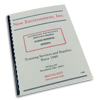
Student Material Includes:
- Student Background Survey
- Student Classroom Workbook
- 20 Question Test
- Certificate Of Completion*
- Participant Evaluation Form
$20.50
Add to Cart
8-Hour HAZWOPER Refresher - B Student Classroom Material
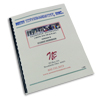
Student Material Includes:
- Student Background Survey
- Student Classroom Workbook
- 20 Question Test
- Certificate Of Completion*
- Participant Evaluation Form
$20.50
Add to Cart
8-Hour HAZWOPER Refresher - C Student Classroom Material
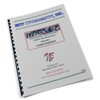
Student Material Includes:
- Student Background Survey
- Student Classroom Workbook
- 20 Question Test
- Certificate Of Completion*
- Participant Evaluation Form
$6.00
Add to Cart
DOT Emergency Response Guidebook
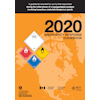
This Guidebook is primarily a guide to aid first responders in quickly identifying the
specific or generic hazards of the material(s) involved in the incident, and protecting
themselves and the general public during the initial response phase of the incident.
The Emergency Response Guidebook is updated every three to four years to accommodate new
products and technology.
Use this DOT-issued guidebook to help you satisfy DOT's requirement that Hazmat shipments
be accompanied by emergency response information (49 CFR Section 172.600).
2020 Emergency Response Guidebook Summary of Changes from 2016 ERG:
- Reviewed the guidebook and changed these sections to make them easier to read and understand
- Added a new decontamination section to describe basic contamination theory and proper decontamination techniques.
- Reworked the BLEVE section into the BLEVE and Heat Induced Tear section. This section now shows the cause and hazards of BLEVEs and Heat Induced Tears.
- Expanded Rail Car Identification Chart and Road Trailer Identification Chart to two pages each.
- Updated Table 1 and Table 3 based on new TIH data and reactivity research.
- Added Lithium battery label and marking, and gasoline placard to the Table of Markings, Labels, and Placards.
Added New terms and their definitions to the Glossary.
- Basic information on Improvised Explosive Devices (IED) in the Criminal or Terrorist Use of Chemical, Biological and Radiological Agents section.
- Added A top view illustration of the TC117/DOT117 to the Rail Car Identification Chart.
- Added Illustration of an Intermodal Freight Container to the Road Trailer Identification Chart.
- Improved the illustrations in the Rail Car and Road Trailer Identification Charts.
- Added fifteen new materials (UN3535 to UN3549) listed in the UN Recommendations on the Transport of Dangerous Goods (up to the 21st revised edition).
- Re-evaluated the polymerization hazard criteria for some high-risk materials, and added the polymerization marking (P) to 13 materials
- Re-analyzed the chemical properties of many materials to make sure that they’re assigned to the appropriate Orange Guide. Also moved thirty-four materials to a different Orange Guide.
- Added an introduction called “How to use the Orange Guides”. This new section explains the 4 parts of an Orange Guide. In this section, the terms “evacuate” and “isolate” are defined
Published by the U.S. Department of Transportation. 4"x5.25" Pocket Version